
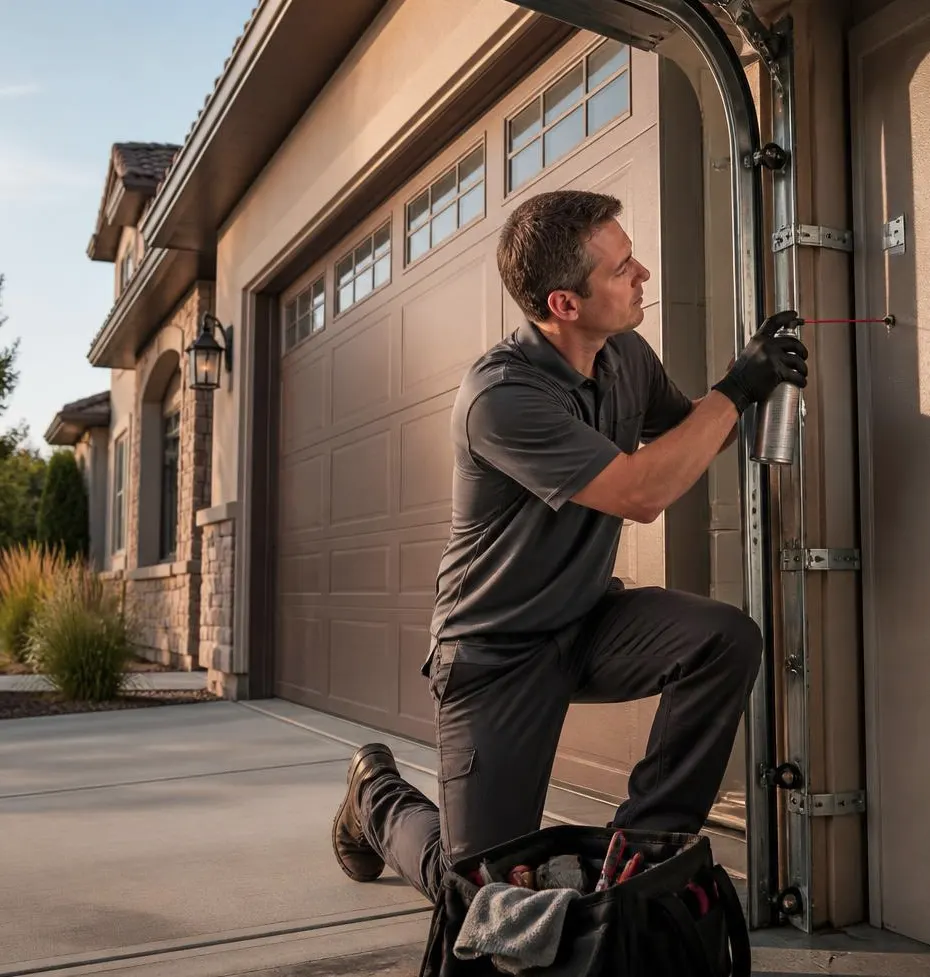
What a Tech Sees on a Typical Call
The call usually starts the same way: someone's detached shop, pole barn, or small business bay has a door that's sagging, slow, or stuck half-open. One spouse insists it's "just a big garage door, same as the house." The other swears it's a commercial unit and should be treated differently. When the technician pulls up, the answer is often somewhere in between: a residential-grade door that's been pushed into commercial-style use, wearing out years ahead of schedule because the springs, track, and opener were never rated for that kind of workload.
The Real Differences
Commercial and residential overhead doors can look almost identical from the driveway, but the parts inside tell a different story.
Spring and Cycle Life
Every torsion spring is rated for a certain number of open-and-close cycles before it needs replacing. A residential door that opens a few times a day is built around a lower cycle count. A door on a shop, farm building, or small business that opens dozens of times daily needs springs rated for a much higher cycle life, or they'll wear out and snap far sooner than expected.
Track and Hardware Gauge
Commercial doors typically use heavier steel tracks, continuous angle mounts, and thicker hardware because they're designed to handle more frequent use and often larger, heavier panels. Residential track is lighter by design — fine for normal home use, but it flexes and loosens faster under commercial-level traffic.
Opener Duty Cycle
A residential chain or belt drive opener is built to run a few cycles a day without overheating. Commercial settings often call for jackshaft or trolley operators rated for continuous duty, since the motor is working much harder, much more often.
Wind Load and Panel Construction
This matters a lot in our area. Outbuildings used for storage, equipment, or a side business sometimes need the same wind-load bracing and engineered panel strength as a home's garage door, since a failure during a tropical storm can take out whatever's parked or stored behind it. Panel gauge, bracing, and insulation options differ between standard residential doors and heavier-duty commercial models, and swapping in the wrong one is a common source of bent track and off-track doors after a bad storm.
Maintenance Isn't One-Size-Fits-All Either
A door that opens 20–30 times a day needs more frequent attention than one that opens twice:
- Higher-use doors (shops, small businesses, farm buildings) should have cables, rollers, and spring tension checked more often — wear shows up fast when cycles stack up.
- Humidity and heat affect every door here regardless of use. Panels can swell at the seams, and hinges, rollers, and track hardware are prone to rust in our humid stretches, especially closer to the Gulf side of the service area.
- Pre-storm season checks matter for both types. Loose track brackets or worn rollers that would be a minor annoyance on a quiet residential door can turn into a bigger problem when wind load hits a door that's already out of alignment.
- Post-storm inspection after any heavy wind event is worth doing on any door, but especially one that's rated or braced for wind load — a hit that looks cosmetic can shift the track just enough to cause binding weeks later.
When to Call Greenville Garage Door Pro
If a shop, outbuilding, or home garage door is cycling more than it used to, sagging on one side, or you're not sure whether it was ever rated for how hard it's being used, that's worth a second set of eyes. We handle Garage Door Tune-Up & Maintenance to catch wear before it becomes a failure, and Garage Door Spring Repair for doors that are clearly working harder than their springs were built for. We also sort out the off-track and misalignment issues that tend to follow our afternoon downpours and storm season winds.
If you're trying to settle a disagreement about what's really installed on your property in Greenville, Madison, Monticello, Lee, Perry, Live Oak, Lamont, or Pinetta, give Greenville Garage Door Pro a call — we'll tell you straight what you've got and what it actually needs.